Mastermind · public example

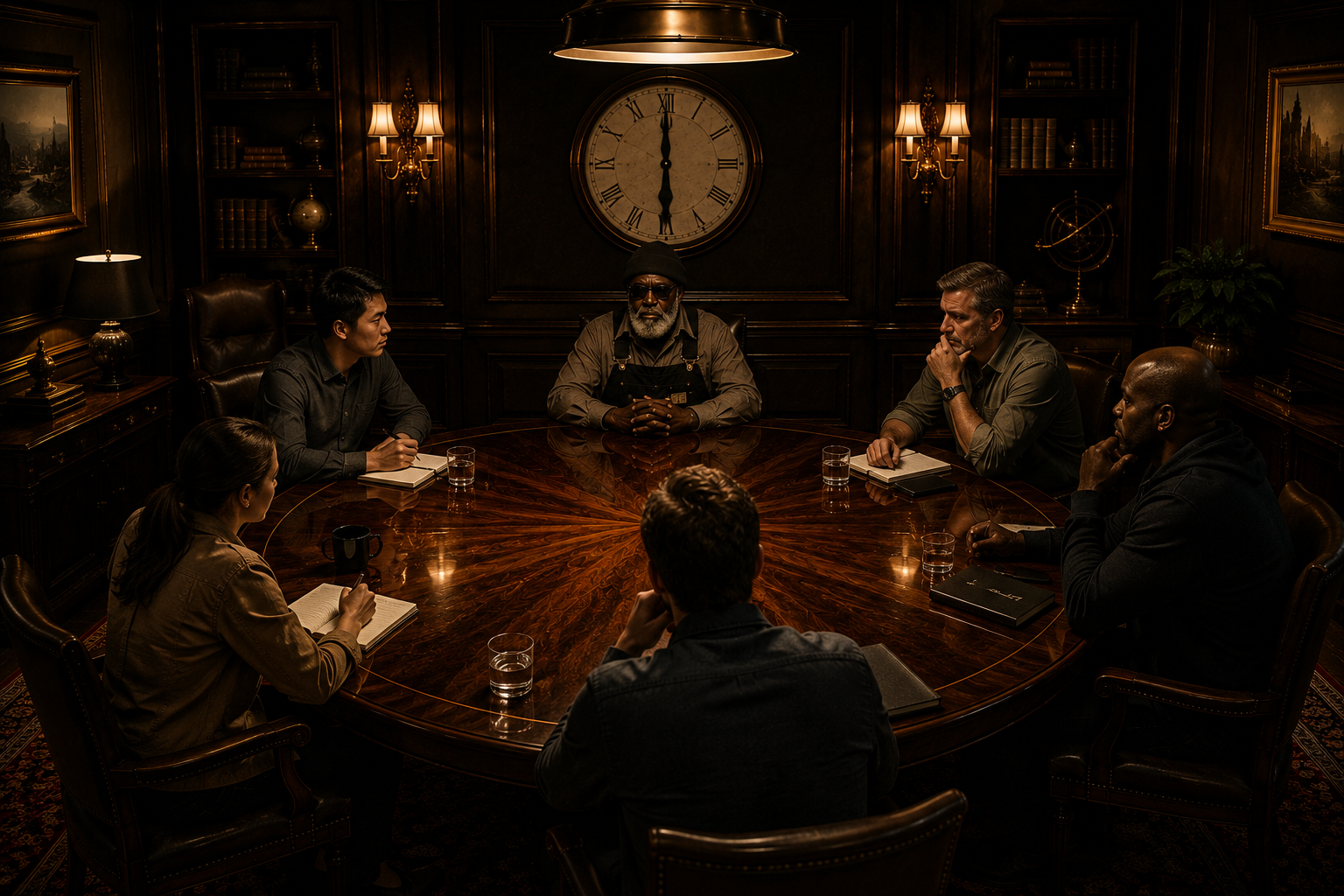
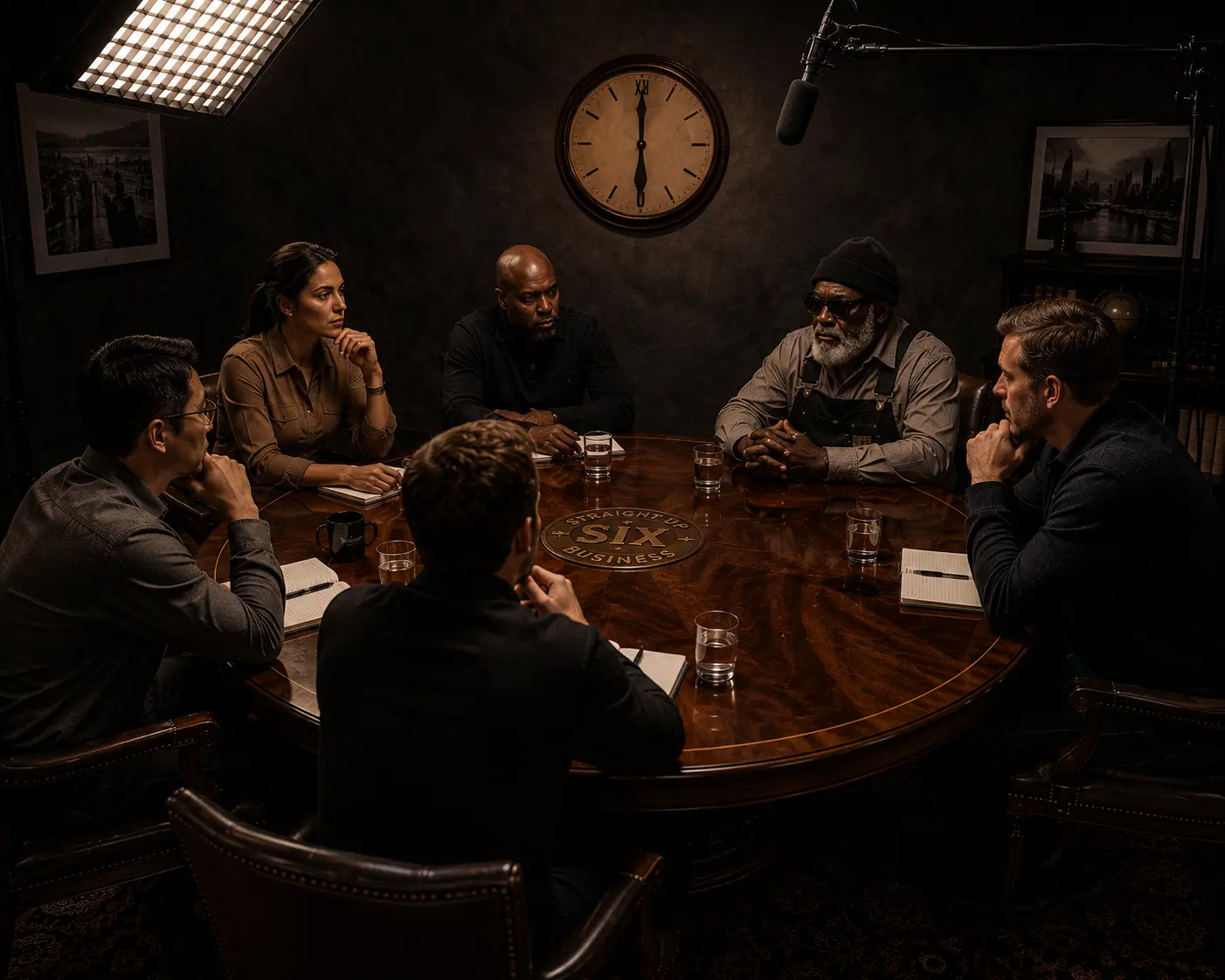
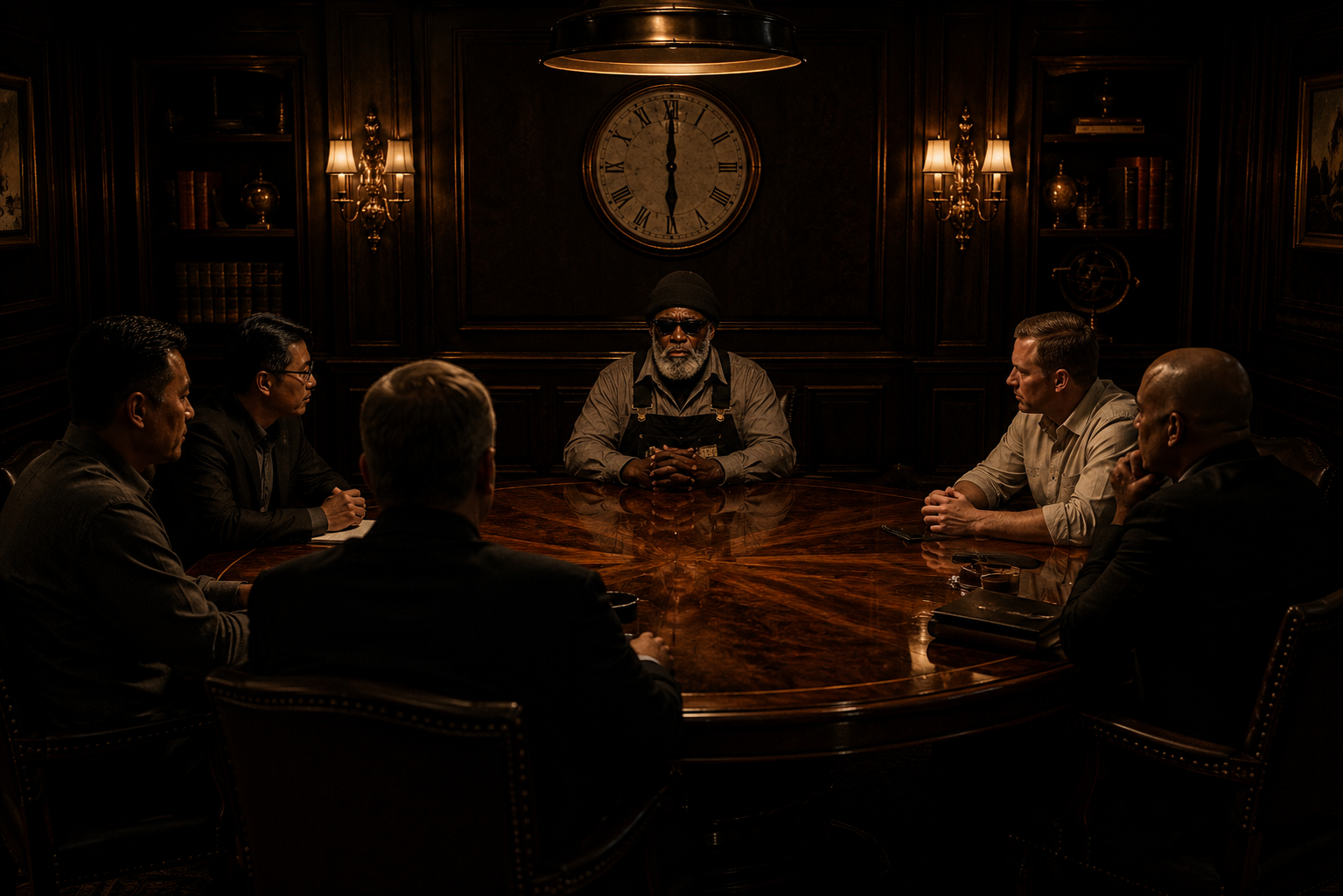
At the table

Partnership · Practice-made public example

The Deliberation

At the table

  1. ICharlieArchitect-voice
  2. IIAbraham LincolnStatesman
  3. IIIConfuciusChinese teacher · philosopher
  4. IVJohn Stuart Mill
  5. VMarcus AureliusRoman emperor · Stoic writer
  6. VIHarriet TubmanSocial reformer

AI-rendered perspectives—not quotations. The named people did not participate.

The question

Brought to this example

A business partner helped me build what we have, but they are now slowing decisions and costing opportunities. When does loyalty require patience—and when does it require changing the partnership?

The First Sitting

The table takes the question in turn

Charlie

Architect-voice

Charlie — the architect-voice of the Mastermind Roundtable practice and methodology, not a historical figure.

People always think moving fast is the same as being smart. You see missed chances. But what about the bad ideas your partner killed just by dragging their feet? It is easy to hate friction until you realize friction keeps the car on the road. When you push an old friend out, you trade steady brakes for pure gas. Maybe they have slowed down because the stakes got bigger and the room for error got smaller. Or maybe you just want someone who nods at your ideas. Which risk hurts worse?Interpretation

Abraham Lincoln

Statesman

A house split against itself cannot stand, but tearing down a wall can make the roof fall in on you too. You think this partner is in your way. Yet you forget what it costs to turn an ally into someone cast aside. Men who feel pushed out do not always go quietly into the night. They take pieces of the work with them, or their silence leaves a wound that never heals. Keeping difficult men close can be painful. But what happens to the whole house once you start pulling out the foundation logs?Interpretation

Confucius

Chinese teacher · philosopher

His students gathered his sayings in the Analects, a book on family duty, good conduct and fair rule.

When you walk behind someone who cleared the path, do you cast them aside when the road gets smooth? Loyalty is not a coin you spend only when it buys quick gain. If you cut down a partner to move faster, everyone who works for you will see it. They will learn that honor dies when profit knocks. You may win the next prize, but you teach the household to abandon you when your own steps grow slow. Does an empire built on broken trust keep its value when the cold wind blows?Interpretation

John Stuart Mill

Guest voice · background unverified

You assume that fast decisions lead to the greatest good. That is a dangerous guess. A partner who questions you forces your ideas to prove their worth. If you remove the person who says wait, you remove the only test your plans have to pass. You think you are losing opportunities out in the market. But you might be gaining something rarer right now: a guard against your own blind spots. If everyone in the room runs at your speed, who is left to point out the edge of the cliff ahead?Interpretation

Marcus Aurelius

Roman emperor · Stoic writer

The lens used for this seat: Duty, limits and self-command.

You look at this person and feel irritation because they do not move as you wish. But why did you expect another man to act like your own shadow? We are made to work together, like hands and feet. Blaming them for being slow is like blaming a stone for being heavy. You believe the delay is outside you, in their habits. Yet the real pain is your own wish to control time and other minds. If you cast them out, will your own mind be any calmer, or just lonely with its faults?Interpretation

Harriet Tubman

Social reformer

Out in the dark woods, a person who stops walking puts every single soul in danger. You cannot make a journey if someone sits down in the mud and refuses to take the next step. Fear and delay will get you caught faster than running into the dogs. But leaving someone behind in the thicket has a heavy price too. Once you drop a hand you promised to hold, you carry that ghost all the way to freedom. Can the wagon move forward if the wheels are dragging in the deep ruts?Interpretation

The Facilitator

The room’s host

This role holds the question and records what remains open.

Round close

Strong warnings surfaced on both sides. Slowing down feels like lost time, but that friction protects trust and catches your blind spots. Yet staying stuck while the world moves can bring down everything you built together. Speed carries a price, and waiting carries one too. The question still open is simple: does changing this partnership clear the path forward, or does it throw away the brakes you need to survive?

This is an opening sitting. A private deliberation convenes across three rounds to test where each view holds and where it breaks.

The Facilitator’s Read

WHAT THE ROOM SURFACED

Some seats said a slow partner acts like brakes that stop bad ideas and test plans.

Others warned that casting an ally aside breaks the foundation and ruins trust with everyone watching.

One voice warned that sitting still in deep mud puts the whole journey in danger.

WHERE THEY DIFFERED

Some seats treated the delay as a shield that keeps the car on the road.

Another seat saw delay as a direct threat that can get everyone caught.

They also differed on whether the trouble comes from the partner or from your own wish to control another mind.

WHAT WAS CHALLENGED

The idea that fast decisions always bring the best outcome was questioned.

The seats pushed back on the belief that removing a partner can be done without tearing down the house.

The thought that delay is purely the other person's fault was challenged as your own lack of patience.

WHAT MAY STILL BE MISSING

No seat discussed the written agreements or legal rules that tie the partners together.

The words did not address whether the partner knows they are moving too slowly.

There was no mention of how large the lost profits really are.

WHAT REMAINS UNRESOLVED

How to tell if the partner is guarding against a cliff or just dragging the wagon into a rut.

Whether the danger of moving too slow is greater than the ghost of leaving a friend behind.

The point where keeping a promise costs more than the work itself can bear.

The human decision

No person attended this example or wrote a decision. The table’s words are not a commitment.

Back to the reading room