




Mastermind · public example

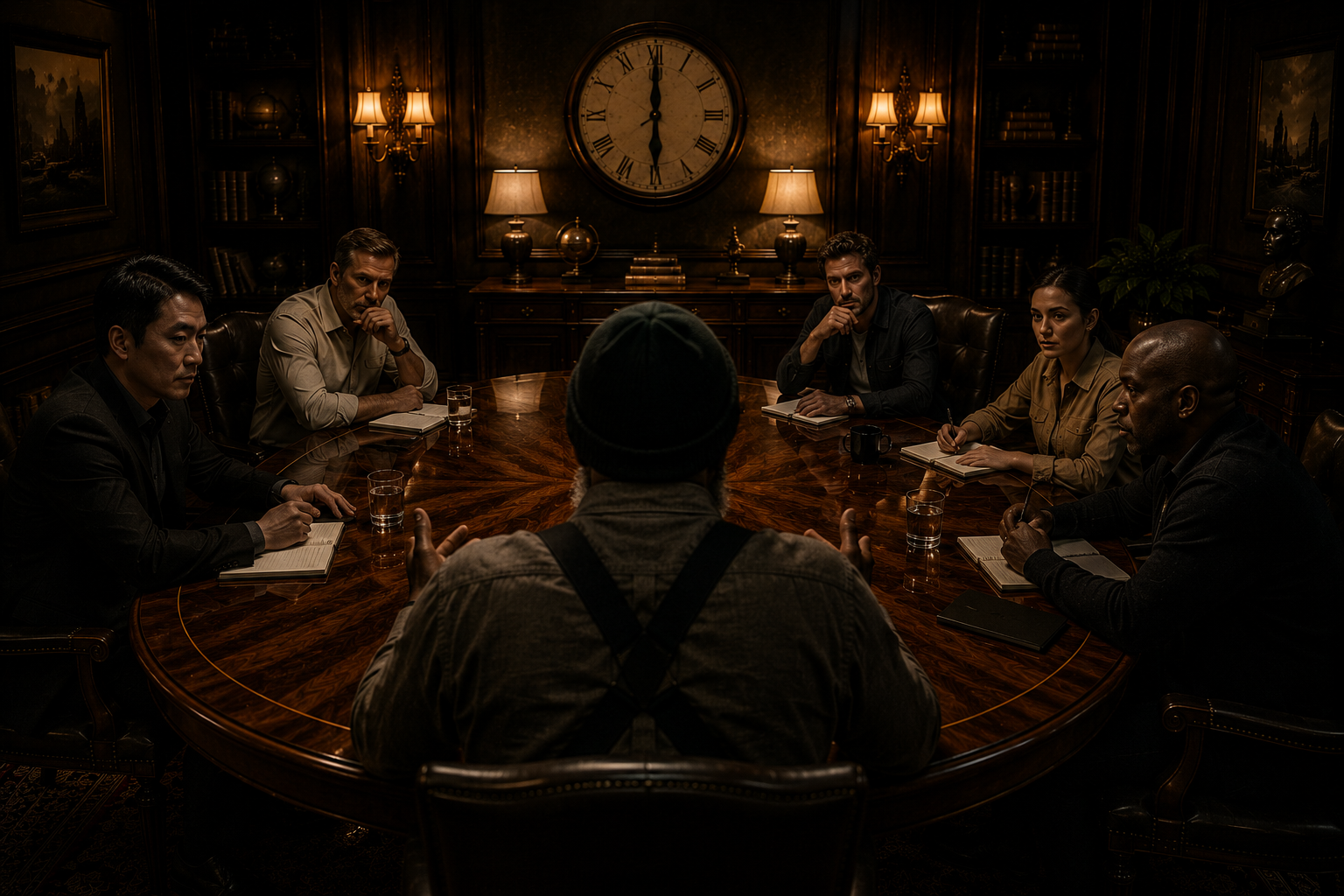
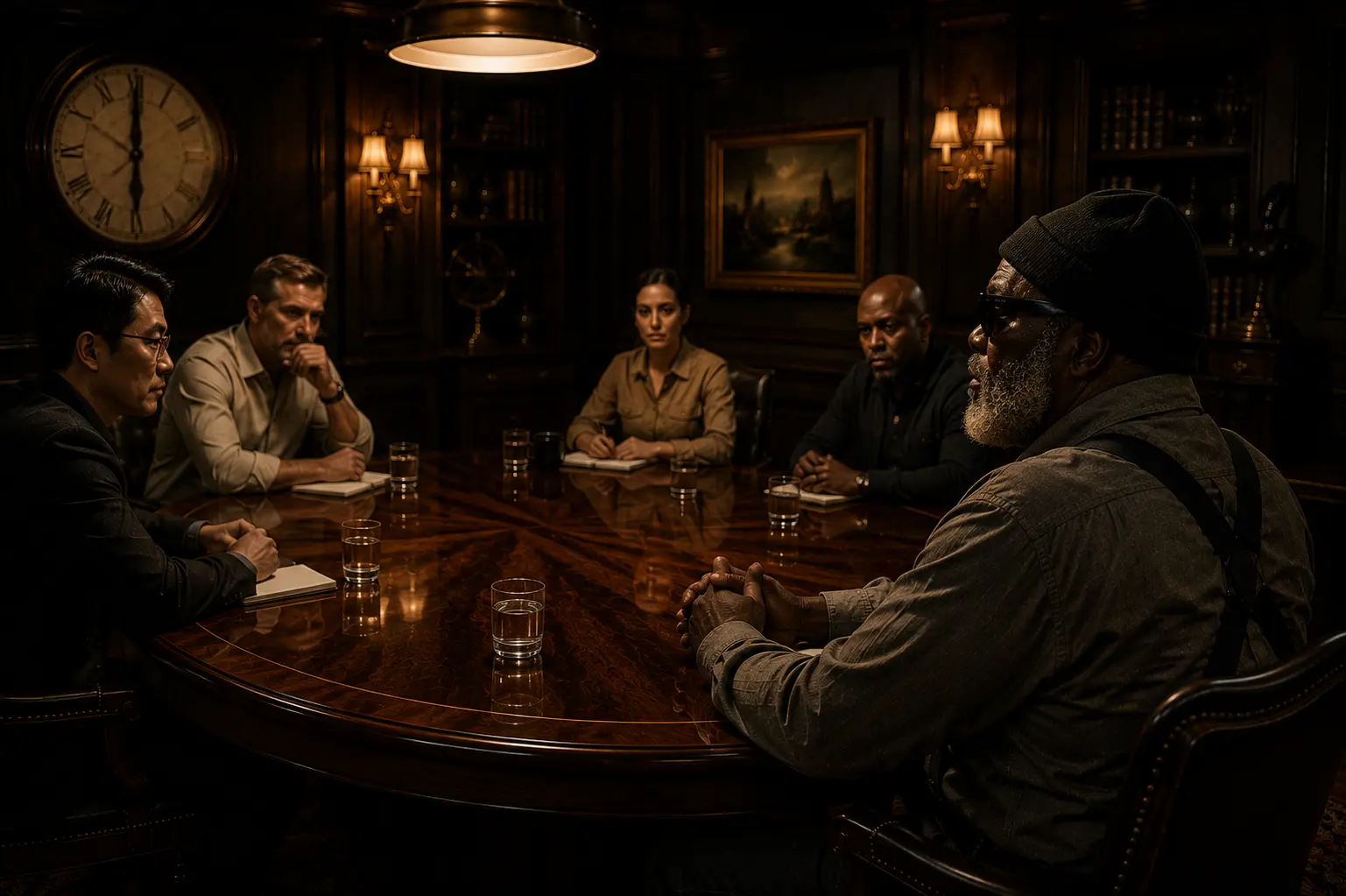
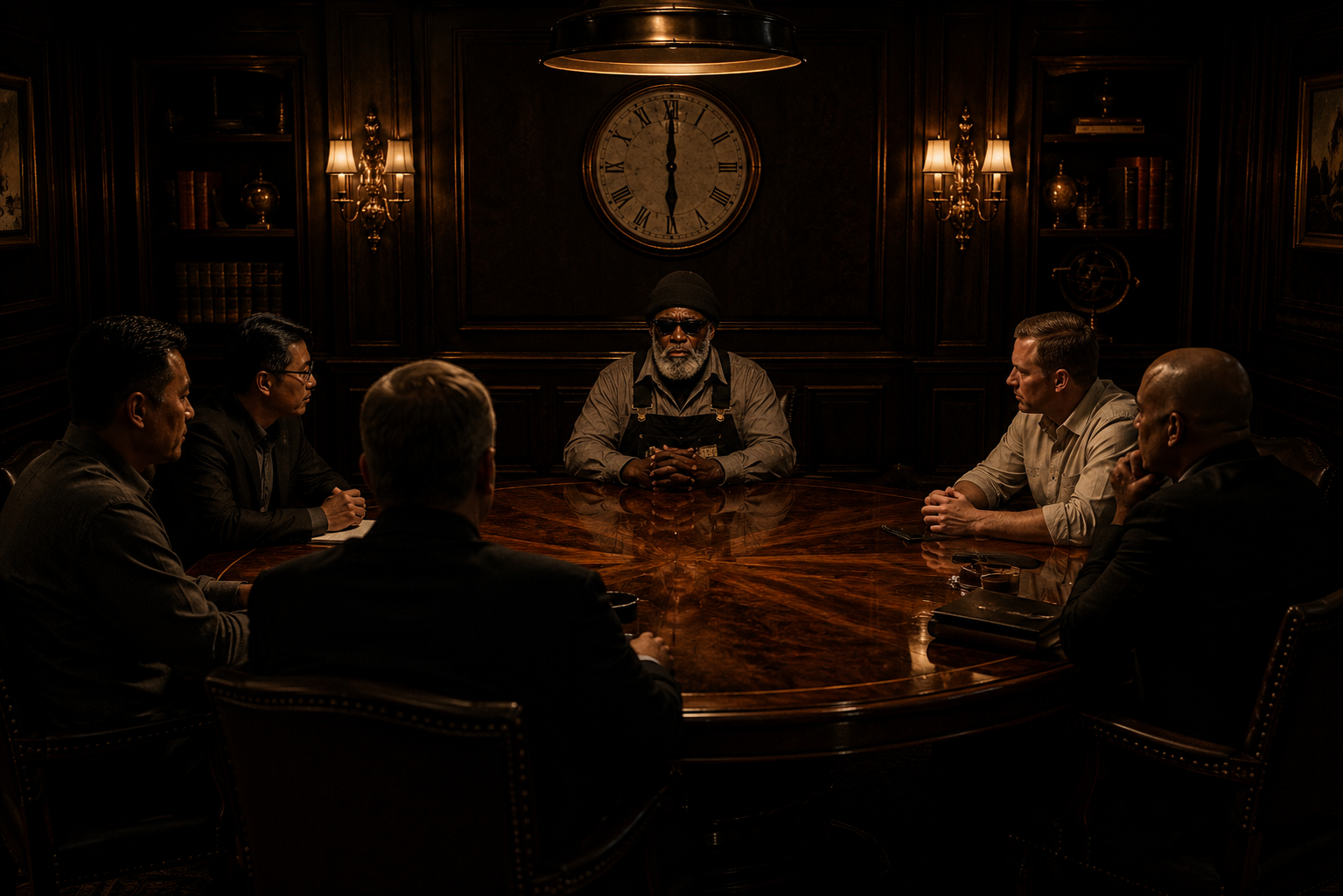
At the table

Growth · Practice-made public example

The Deliberation

At the table

  1. ICharlieArchitect-voice
  2. IIAndrew CarnegieBusiness leader
  3. IIIMadam C.J. WalkerBusiness owner · hair care pioneer
  4. IVPeter DruckerManagement writer · consultant
  5. VBenjamin FranklinStatesman · inventor · writer
  6. VISenecaPhilosopher

AI-rendered perspectives—not quotations. The named people did not participate.

The question

Brought to this example

My company has an opportunity to double, but doing it would require more debt, more people, and less control from me. What would have to be true for the growth to be worth what I would give up?

The First Sitting

The table takes the question in turn

Charlie

Architect-voice

Charlie — the architect-voice of the Mastermind Roundtable practice and methodology, not a historical figure.

People love big numbers. They think bigger is always better. It is usually just more friction. Invert the problem. Think about how to ruin what you have right now. The fastest way is debt you cannot pay when bad luck hits. You bring in new people who do not care like you care. Then you spend your days refereeing fights instead of doing good work. The pain comes right away. The reward might never show up at all. What if staying right where you are is the only smart move on the board?Interpretation

Andrew Carnegie

Business leader

I watched many men build big mills before they had the market to feed them. The debt ate them alive before the steel was even cool. When you borrow, the banker is your master. Every dollar of interest must be paid whether your shop is busy or silent. More men mean more waste unless you watch every penny like a hawk. If you let go of the reins, someone else will ride the horse into the ditch. Growing big is a fight with ruin every single morning. Are you ready to let the bank own your sleep?Interpretation

Madam C.J. Walker

Business owner · hair care pioneer

She built a hair care business for Black women and trained women as sales agents.

I built my work by looking my agents in the eye. I trained women to carry my name with pride. When you bring in a crowd of strangers, they do not feel the soul of the work. They see a paycheck, not a calling. You think more hands make light work. Often, they just make more messes for you to clean up in the dark. You trade your good name for a promise of size. If the people on the front line do not care, the whole house falls. What good is doubling if the spirit leaks out?Interpretation

Peter Drucker

Management writer · consultant

He wrote about how people, work and the purpose of a business fit together.

Growth is not a virtue in itself. Many businesses grow right into the grave. When an organization doubles, it does not just get larger. It becomes a totally different beast. Communication breaks down. What used to happen by speaking across a desk now requires three meetings and a manual. You stop looking at the customer because you are too busy looking at your own charts. Size creates overhead long before it creates profit. If the extra scale does not make the core work better, why does anyone call it progress?Interpretation

Benjamin Franklin

Statesman · inventor · writer

The lens used for this seat: Practical judgment, habits and public responsibility.

Borrowing money makes a free man into a servant. When you owe a creditor, you wake up early with dread in your chest. A small leak can sink a great ship, and debt is a very wide hole in the boat. You trade your peace of mind for the vanity of being large. Many people think they own a large business, but the business actually owns them. You give away your own say in things just to manage more names on a ledger. Is a bigger cage really better than your open sky?Interpretation

Seneca

Philosopher

The mind that hungers for more is never at rest. You already have enough to live, yet you volunteer for chains. Debt is not merely money owed. It is your future peace pledged to a master. When you invite more people into your house, you invite their troubles, their greed, and their carelessness. You think you will command them, but their demands will command you. A man is truly wealthy when he wants less, not when he carries a heavier load. What are you buying with this growth that you do not already possess?Interpretation

The Facilitator

The room’s host

This role holds the question and records what remains open.

Round close

The voices pointed to the heavy price of getting bigger. You heard about the pain of debt, the mess of managing strangers, and losing your grip on what you built. Size often eats profit and peace long before it gives anything back. What remains open is this: Can you name any real good that doubling brings, or does the push to grow come only from the fear of standing still?

The Second Sitting

The room answers back

Charlie

Architect-voice

Andrew Carnegie talks about watching every penny like a hawk. That sounds tough, but it misses the trap. When an owner watches every single penny, the owner becomes a prison guard. Nobody underneath makes a move without permission. Speed dies. You might save five cents on a broom while the market changes right under your feet. Hard watching does not protect you from bad math. If the unit economics break when you scale, all that watching just gives you a front-row seat to your own slow funeral.Interpretation

Andrew Carnegie

Business leader

Seneca believes peace comes from wanting less and staying put. That is fine for a man in a garden, but commerce is war. A shop that refuses to grow does not stay safe. Bigger rivals buy raw supplies cheaper. They hire your best helpers right out from under you. They cut prices until your customers walk away. Seneca thinks holding back keeps you free from masters. In truth, refusing to take ground just picks which rival gets to put his boot on your neck. Safety in smallness is pure make-believe.Interpretation

Madam C.J. Walker

Business owner · hair care pioneer

Peter Drucker worries that manuals and meetings ruin the work. He thinks the problem is paperwork and charts. That misses where the true rot starts. Paperwork does not kill a company. Greed and bad faith kill it. You can write all the clean rules you want, but rules do not make people honest when the boss walks out the door. Drucker acts like better systems keep the customer safe. If the people doing the work have bad hearts, no chart on earth will stop them from cheating the customer blind.Interpretation

Peter Drucker

Management writer · consultant

Charlie says staying right where you are is the smartest move on the board. That assumes a company can simply freeze in time. It cannot. An organization is not a rock. It is a living machine. If you do not give bright people bigger challenges, they leave. The ones who stay are the ones with nowhere else to go. Stagnation rots skill faster than bad debt rots cash. Charlie treats standing still as safe harbor. Often, keeping things exactly as they are is just choosing slow decay over fast risk.Interpretation

Benjamin Franklin

Statesman · inventor · writer

Madam C.J. Walker hopes that workers will share the spirit of the founder. That is a sweet thought, but human nature does not run on another person's dream. People work for their own bread and their own families. When you expect hired hands to love your business like a mother loves a child, you set yourself up for heartbreak. Relying on devotion instead of strict contracts and clear ledger accounts invites neglect. Faith in other people's loyalty is the most expensive mistake a trader can ever make.Interpretation

Seneca

Philosopher

Benjamin Franklin fears the banker holding a note. He thinks the outside creditor is the master who steals your sleep. But the banker only holds paper. The true master is already inside your own chest. It is the restless itch to prove your importance by ruling over more things. Even if you paid cash and had zero debt, a larger empire still binds your soul to endless worry. Franklin spots the trap of money, yet he ignores the trap of pride. You do not need a loan to become a miserable slave.Interpretation

The Facilitator

The room’s host

Round close

Two sides clashed sharply. Staying small might invite slow decay, lost workers, and defeat by bigger rivals. Yet doubling down brings heavy debt, hired hands who do not share your heart, and endless worry. The open question remains: Can this business double in size without ruining the very peace and control that made it worth running in the first place?

The Third Sitting

What remains after the voices

Charlie

Architect-voice

Staying small makes sense when your edge comes from extreme craft and trust. In that small ring, you can charge high prices and keep costs near zero. You avoid messy bank loans and bad hires completely. But that view falls apart the moment a giant comes into your town. A rival with deep pockets can run at a loss for years just to starve you out. If staying small means you cannot defend your lunch against a bruiser, your caution turns into a slow surrender.Interpretation

Andrew Carnegie

Business leader

Heavy expansion works only when sheer volume drops your price so low that no competitor can match you. If every extra yard of cloth costs less to make, the debt pays for itself quickly. But this logic snaps in half the day orders dry up. The mill sits cold, yet the banker still demands his interest check every month. When demand drops even a little, massive fixed costs turn into a noose. Scale saves you during boom times, but it buries you during a freeze.Interpretation

Madam C.J. Walker

Business owner · hair care pioneer

Keeping your arms around the work holds true when your name and personal care are what customers buy. People pay for trust, and trust comes from owners who look them in the face. Yet that belief hits a wall when customers stop caring about care. If buyers only want cheap goods delivered by tomorrow morning, personal devotion means nothing to them. You kill yourself trying to love every customer while a faceless factory eats up the entire market simply by being faster.Interpretation

Peter Drucker

Management writer · consultant

Building systems and adding staff makes sense when the founder is the bottleneck choking all progress. If skilled people can take the work and run it better through clear rules, growth creates real value. But this breaks down when the rules start serving themselves. Managers hire assistants, who create reports that nobody reads, while costs balloon out of sight. Soon the business exists only to feed its own internal engine, and the customer is treated as an annoying interruption.Interpretation

Benjamin Franklin

Statesman · inventor · writer

Refusing debt protects you when hard times hit and the river freezes over. You sleep soundly because no creditor can knock on your door and take your tools. But that caution shatters when an open window of trade passes by forever. If a neighbor borrows money to buy the best press or lock up the best wharf, he wins the trade for twenty years. By hugging your pennies so tightly out of fear, you might save your pride while losing the entire game.Interpretation

Seneca

Philosopher

Prizing your peace over larger property holds firm when you already have what nature requires. More goods do not bring a calmer soul, only more things to guard and fear losing. But inner quiet does not stop the outside world from crashing through your door. When a bad harvest comes or prices rise, having no surplus leaves you weak. Pure contentment works for a sage in a hut, but a business owner without extra resources is easily crushed by the smallest turn of bad fortune.Interpretation

The Facilitator

The room’s host

Round close

The talk showed two sharp sides. Staying small keeps your work pure and protects your peace of mind, but it leaves you weak if a deep-pocket rival attacks. Growing builds power and lowers your costs, but heavy bank debt and extra managers can sink you if sales slow down. The open question is: Which danger can the business actually survive—being starved out by rivals, or choking on its own new weight?

The Facilitator’s Read

WHAT THE ROOM SURFACED

Taking on debt, hiring crowds of workers, and losing control can bring heavy costs, broken work, and endless worry.

Staying small protects your peace and personal touch, but it leaves you open to rivals who can buy cheaper and starve you out.

WHERE THEY DIFFERED

Some saw holding still as safe and wise, while others saw it as a slow death that drives good helpers away.

Some trusted personal spirit and care, while others argued that only strict contracts, lower unit costs, and formal systems can manage growth.

WHAT WAS CHALLENGED

Watching every penny was called a trap that kills speed, while relying on worker loyalty was called an expensive mistake.

Blaming outside debt was challenged by calling out inner pride, and relying on written rules was challenged by the danger of bad hearts.

WHAT MAY STILL BE MISSING

The talk did not look at the company's real cash in the bank to see if it could grow without bank loans.

No one looked at whether current customers want personal craft or cheap, fast goods.

WHAT REMAINS UNRESOLVED

It is still not settled whether doubling will crush the business under heavy debt if orders suddenly freeze.

It also remains open whether staying small will lead to defeat by larger rivals with deeper pockets.

The human decision

No person attended this example or wrote a decision. The table’s words are not a commitment.

Back to the reading room